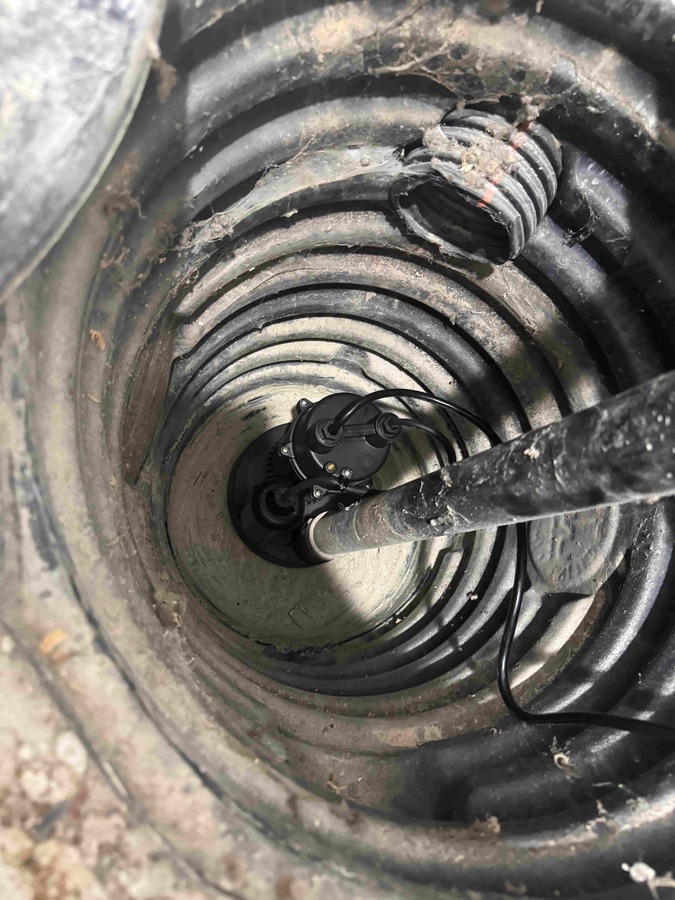
Every March we get the same wave of calls. The snow that's been piling up since December lets go all at once, a rainy few days on top of it, and basements that have been bone dry for a decade suddenly have an inch of water in them. It's almost always a sump pump that wasn't checked before it had to work, not a pump that was broken all along. A ten-minute check in February saves a lot of soaked drywall in April.
Why the Melt Hits Basements So Hard
Homes near Kempenfelt Bay, Lake Simcoe and the smaller lakes around Wasaga Beach and the rest of the county sit on ground that's already saturated by late winter. When the melt lets go fast, and especially if a spring rain lands on top of it, the water table around the foundation rises faster than the soil can drain it away. Your sump pit fills, the float switch trips, and the pump is supposed to kick on and push that water out before it finds its way through a crack or a weeping tile joint. If the pump hasn't run in eight months, that's the worst possible moment to find out it's seized.
The Bucket Test
This takes five minutes and tells you almost everything. Pour a few buckets of water straight into the sump pit until the float rises and the pump kicks on. Watch it cycle through a full run: it should switch on smoothly, pump the pit down quickly, and shut off cleanly without running dry or chattering. If it hesitates, hums without moving water, or the float looks stuck against the side of the pit, that's a real problem, not a maybe. Do this test in February, not the week the snow starts melting, so there's time to fix what you find.
Float Switches Fail More Than Motors
Most sump pump calls we get aren't a dead motor, they're a float switch that's jammed, tangled in its own cord, or coated in enough sediment that it doesn't rise properly anymore. It's a cheap part and a fast fix when we catch it early. Left alone, a stuck float means the pump either never turns on or never turns off, and both of those end badly, one with a flooded basement, the other with a burnt-out motor.
Battery Backups: The Honest Version
A battery backup pump is worth having if your basement is finished or holds anything you'd hate to lose, because the moment you actually need a sump pump most is often during a storm when the power's out too. That said, a backup battery isn't a forever part. Most lose real capacity after three to five years, so if yours has never been tested or replaced, it may not have the run time you're counting on. We'll test it honestly and tell you if it still holds a charge, we won't sell you a new one you don't need.
Repair or Replace?
A pump under five years old with a stuck float or a dirty check valve is usually worth repairing. Past seven or eight years, especially if it's been running rough or the motor sounds strained under load, replacement is the better call financially, since a mid-melt failure costs a lot more than the pump itself. We'll look at the actual unit and give you a straight answer either way.
Want your sump pump checked before the next melt, or dealing with a wet basement right now? Call us or reach out through the contact form and we'll get someone out to look at it.
Call (647) 552-3704More reading: Plumber in Barrie · Plumber in Wasaga Beach · Keep Pipes From Freezing in Simcoe County