Every winter we get the same calls, almost on schedule. A hard cold snap rolls through Simcoe County, and a day or two later the phone starts ringing with "no water" or, worse, "water coming through the ceiling." Pipes don't freeze randomly. There's a pattern to it, and once you know the pattern, most of it is avoidable.
Which Pipes Freeze First
Cold finds the weak spots. The pipes that freeze first are almost always the ones with the least protection from the house's main heat: supply lines running along an exterior wall, especially in a bathroom or kitchen built onto an addition; anything in a crawl space that isn't fully conditioned; and lines out at a cottage or seasonal property that's sitting empty with the heat turned down or off entirely. Interior walls in the main part of a heated house almost never freeze. It's the pipe that's basically exposed to the outside temperature with just a layer of siding and insulation between it and January that gets you.
Prevention That Actually Works
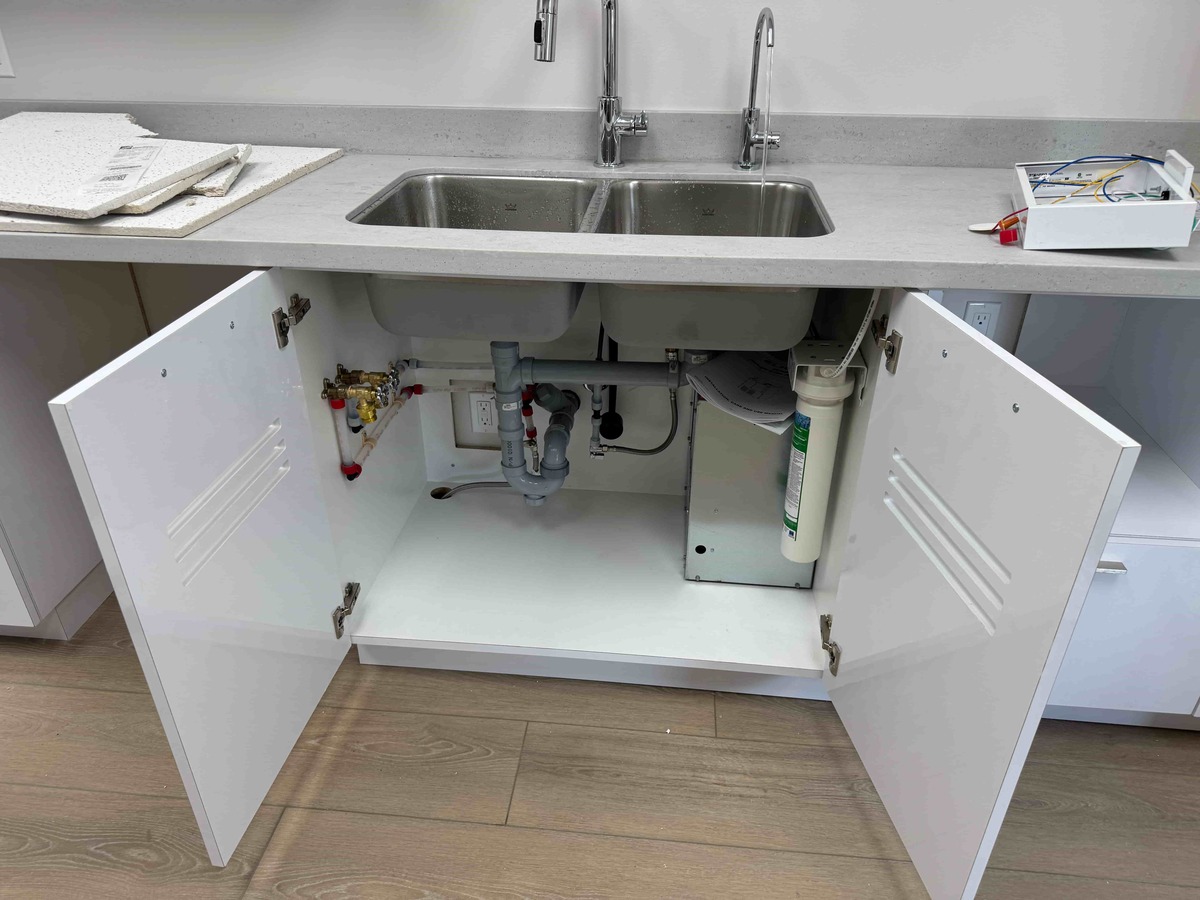
Heat cable along a known problem line is worth the money if you've had an issue there before. It's not expensive to run and it solves the problem for good. On the really cold nights, the ones pushing toward -25°C, letting a tap connected to a vulnerable line drip slightly keeps water moving, and moving water doesn't freeze as easily as still water. If you've got outdoor taps, shut off the interior valve and drain the line in the fall before the first hard freeze. A lot of burst pipes we see start right at an outdoor tap that never got winterized. And if there's plumbing behind cabinet doors on an exterior wall, leaving those doors open on brutal nights lets the room's heat actually reach the pipe instead of getting blocked by cabinetry.
Foam pipe sleeves are cheap and worth putting on any exposed line in a garage, crawl space, or unheated basement corner. They won't save a pipe from a truly hard freeze on their own, but combined with heat cable or a dripping tap, they buy you real margin. And if you're heading out of town for a stretch in winter, don't just turn the heat down to save money. Leaving the furnace set no lower than 13-15°C keeps interior temperatures high enough that most pipes stay safe even if a cold snap hits while you're away.
If a Pipe Is Already Frozen
First thing: shut off the main water supply. If a frozen section has already split, even a little, the second it thaws you'll have water running until someone turns it off, and you want that decision made calmly, not while water's spraying. From there, safe thawing means a hair dryer, a heat lamp at a safe distance, or towels soaked in hot water wrapped around the pipe, working from the tap end back toward the blockage. Never use a propane torch or any open flame near a pipe. It's a fast way to start a house fire, and it's happened to people who thought they were being careful.
When to Call Us
If you can't find the frozen section, if there's any sign the pipe has already split (a wet spot, a bulge, discoloured drywall), or if you just don't want to be the one troubleshooting a burst pipe in a full-blown emergency, that's when you call. We handle this constantly across Barrie, Newmarket, Orillia, Midland and the rest of Simcoe County, and getting to a burst line fast is the difference between a repair and a full basement cleanup.
Dealing with a frozen or burst pipe right now, or want to get ahead of it before the next cold snap? Call us or reach out through the contact form and we'll walk you through it.
Call (647) 552-3704More reading: Plumber in Barrie · Plumber in Orillia · Why Does My Drain Keep Clogging?