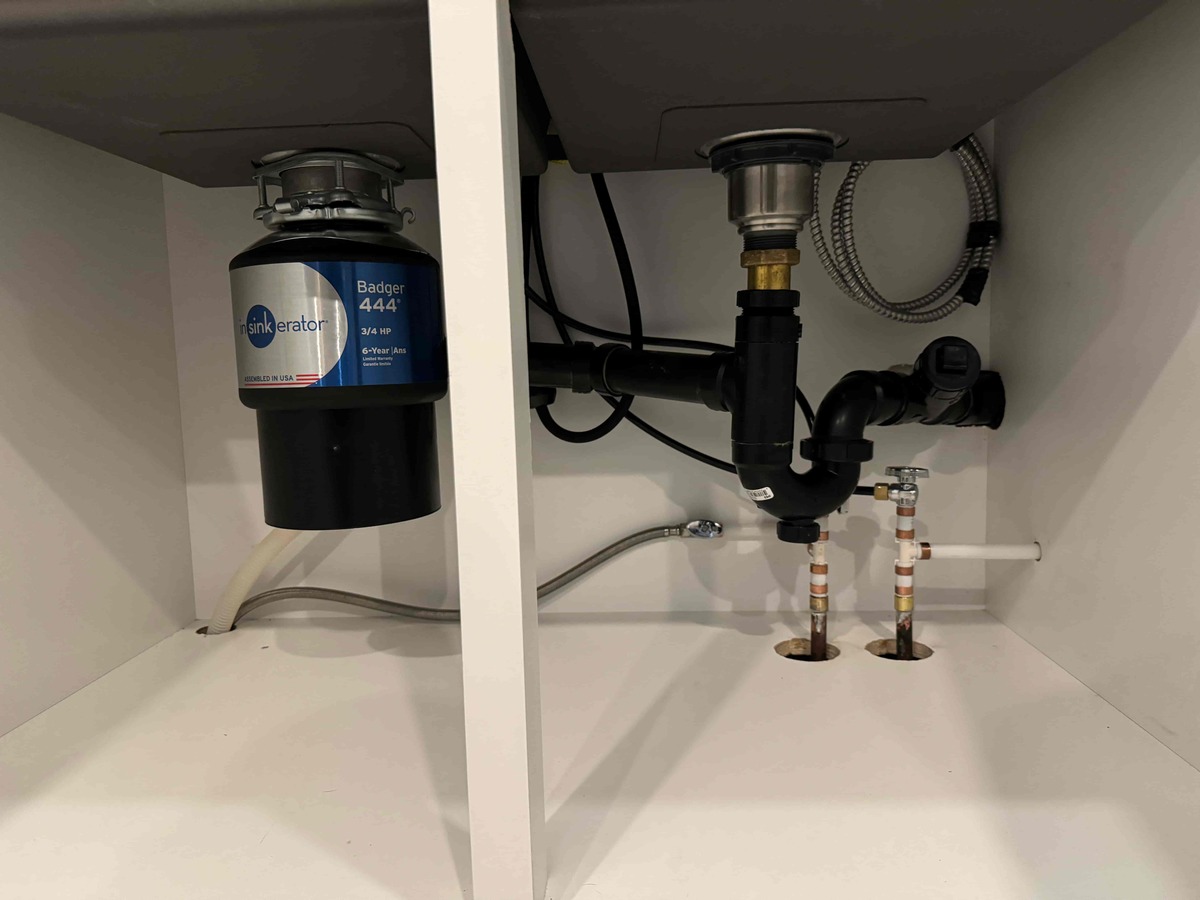
We hear this one a lot: "I had it snaked three months ago and it's already backing up again." Fair question, and the honest answer is usually one of a handful of things, depending on which drain we're talking about.
Kitchen Drains: Grease Is the Main Culprit
Grease goes down the drain as a liquid and doesn't stay that way. It cools as it moves through the pipe, sticks to the walls, and hardens. Every time it happens, the opening gets a little narrower. Coffee grounds and starchy food scraps do something similar, binding to the grease like mortar. A kitchen drain that clogs every few months almost always has a grease buildup problem, not a one-time blockage.
Bathroom Drains: Hair, Soap, and "Flushable" Wipes
Hair combines with soap scum to form a rope-like clump that catches everything after it. And on the toilet side, "flushable" wipes are not actually flushable in any meaningful plumbing sense. They don't break down like toilet paper does, and they're one of the most common causes of a clog we pull out of a line. If wipes are going down your toilet regularly, that's usually the fix right there.
Tree Roots in Older Sewer Laterals
If you're in an older neighbourhood, and this comes up constantly in Barrie and Orillia, the sewer lateral running from your house to the street might still be original clay pipe. Roots find the joints in clay pipe and grow into them, and a snake can clear the blockage without touching the roots that caused it. That's why the same "clog" keeps returning every six to twelve months. Sagging or bellied sections of pipe cause a similar repeat problem: a low spot in the line collects standing water and debris no matter how many times you clear it, because the pipe itself has a low point that isn't going anywhere until it's fixed.
Why One-Off Plunging Doesn't Fix a Recurring Clog
A plunger, or even a basic snake, deals with what's directly in front of it. It doesn't tell you why the clog formed there in the first place. If a drain clears easily but comes back every few weeks or months, plunging it again is just resetting the clock on the same problem. It's the same as sweeping the top layer of a pile without asking why the pile keeps forming.
There's also a difference between a fixture clog and a main line clog worth knowing. If only one sink or tub is slow, the blockage is almost always local to that fixture's own drain: hair, soap, food scraps, something close to the surface. But if multiple fixtures back up around the same time, or a toilet gurgles when the washing machine drains, that points to a blockage further down in the main line, and that's usually where roots or a bellied section come into play.
When a Camera Inspection Makes Sense
Once a drain has clogged more than twice in a short stretch, or if it's a main line rather than a single sink, a camera inspection is worth doing. It shows us exactly what's going on inside the pipe, whether that's roots, a belly, a collapsed section or buildup, instead of us guessing based on symptoms. From there we can tell you honestly whether it's a cleaning, a root cutting, or something that needs a repair.
Got a drain that won't stay clear? Call us or reach out through the contact form and we'll figure out what's actually going on.
Call (647) 552-3704More reading: Plumber in Barrie · Plumber in Newmarket · How Long Does a Water Heater Last in Ontario?